
The scientific discipline of pharmacology studies medications and how they affect living things. It investigates the ways in which drugs and other chemicals interact with biological systems to either have beneficial or negative effects. Pharmacology integrates information from medicine, chemistry, and biology to better understand and enhance medication action.
Describe pharmacology
Pharmacology encompasses more than just the study of drugs. It entails being aware of the qualities, effects, and sources of pharmaceuticals (whether they are from plants, chemicals, or biotechnology).
Pharmacology offers easy answers to questions like:
- How do drugs impact the body?
- How do they do this?
- Why do they occasionally succeed and sometimes fail?
Principal Areas of Pharmacology
Pharmacology is a broad field with several subfields that focus on different facets of medications:
Pharmacodynamics:
This field describes how medications affect the body. It investigates how medications work and how their effects change based on dosage or length of usage.
Pharmacokinetics
is the study of how medications behave within the body, including how they enter the bloodstream, migrate to various bodily locations, and degrade and exit the body.
Clinical pharmacology
is the study of medication use in people that is both safe and effective. It involves assessing drugs in clinical trials and determining the most effective way to provide them to patients.
Toxicology
is the study of the harmful effects that drugs and other substances have on the body. It ensures safety by acknowledging the risks and potential negative consequences of substances.
Neuropharmacology:
This field examines the effects of medications on the neural system. It is crucial for the treatment of conditions like depression, Parkinson’s, and epilepsy.
Psychopharmacology:
Drugs used to treat mental health conditions including anxiety, schizophrenia, or bipolar disorder are the subject of .
Pharmacogenomics:
is the study of how a person’s genetic composition influences how they react to medications. It aids in the development of customised medications based on each patient’s need.
Chemotherapy
is a specialised field that deals with drugs used to treat cancer and infections. These drugs target the body’s harmful bacteria, viruses, or cells.
Applications of Pharmacology in Practice
Numerous practical uses of pharmacology have an impact on medicine and health. Among the most popular applications are:
Finding New Drugs:
Pharmacology aids researchers in the development of medications to treat illnesses for which there is now no cure.
Enhancing Patient Care:
Physicians select the appropriate medications and dosages for their patients based on their understanding of pharmacology.
Disease Prevention:
Vaccines and other medications guard against illnesses before they arise.
Monitoring Drug Safety:
By researching adverse responses and side effects, pharmacology makes sure medications are safe.
Knowing how medications interact with one another helps prevent negative side effects.
Pharmacology’s scope
Pharmacology is becoming more and more significant as medical research develops. Pharmacology has a crucial role in the following areas:
The creation and testing of novel medications to combat illnesses is mostly the responsibility of pharmacologists.
Research:
Labs and academic institutions carry out studies to better understand illnesses and the ways that medications might be helpful.
Pharmacologists collaborate with government organisations to guarantee that medications fulfil safety and efficacy requirements prior to being made available to the general population.
Healthcare:
Clinical pharmacologists make sure patients obtain safe and efficient pharmaceuticals by working in hospitals.
Chemical Safety:
Toxicologists evaluate the safety of chemicals that are present in medicines, food, and cosmetics.
Career Opportunities in Pharmacology
A pharmacology degree opens doors to a variety of occupations and industries. Here are some popular routes:
Pharmaceutical Companies:
Pharmacologists may be employed in production, sales & marketing, quality control, or pharmaceutical research.
Academic:
Research and teaching roles in colleges and universities.
Government Agencies:
Functions in public safety-ensuring regulatory organisations such as the FDA or CDSCO.
Clinical Roles:
Assisting physicians and other healthcare professionals in efficiently using medications.
Biotechnology companies are developing novel biological therapies and medications.
Pharmacovigilance:
Keeping an eye on and overseeing medication safety once it’s on the market.
Drug research and clinical trials are carried out by Contract Research Organisations (CROs).
In conclusion
The fascinating science of pharmacology impacts every aspect of medication development and healthcare. It aids in the development of novel medications, enhances existing therapies, and guarantees the safe administration of pharmaceuticals. Pharmacology provides innumerable chances for those who are driven to Enhance healthcare and scientific knowledge to facilitate development and improve the health outcomes of society.
- Pharmacodynamics: Principles of Drug Action, Drug–Receptor Interaction and Dose–Response RelationshipPharmacodynamics in Simple Terms Pharmacodynamics is the branch of pharmacology… Read more: Pharmacodynamics: Principles of Drug Action, Drug–Receptor Interaction and Dose–Response Relationship
- Pharmacodynamics: Principles of Drug Action, Mechanisms of Drug Action and Theories Behind Drug-Receptor Action
 Pharmacodynamics in Simple Terms Pharmacodynamics is a branch of pharmacology… Read more: Pharmacodynamics: Principles of Drug Action, Mechanisms of Drug Action and Theories Behind Drug-Receptor Action
 - Drug Clearance
 Drug Clearance When administering any medication, it’s crucial to understand… Read more: Drug Clearance
 - Pharmacokinetics: Drug Excretion
 Pharmacokinetics: Drug Excretion The study of how drugs move through… Read more: Pharmacokinetics: Drug Excretion
 - Pharmacokinets: Drug metabolism or Drug Biotransformation
 Pharmacokinets: Drug metabolism or Drug Biotransformation Introduction to Biotransformation or… Read more: Pharmacokinets: Drug metabolism or Drug Biotransformation
 - Pharmacokinetics: Drug Distribution
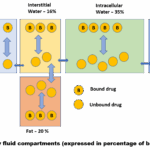 Pharmacokinetics: Drug Distribution Drug distribution refers to the process by… Read more: Pharmacokinetics: Drug Distribution
 - Pharmacokinetics: Drug Absorption, Bioavailability and Bioequivalence
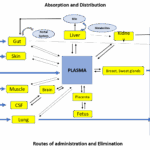 Pharmacokinetics: Drug Absorption, Bioavailability and Bioequivalence Drug Absorption and Bioavailability… Read more: Pharmacokinetics: Drug Absorption, Bioavailability and Bioequivalence
 - Pharmacokinetics: Membrane Transport
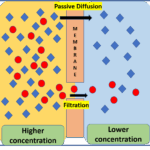 Pharmacokinetics: Membrane Transport Pharmacokinetics is the branch of pharmacology that… Read more: Pharmacokinetics: Membrane Transport
 - General concepts and definitions of Pharmacology
 Pharmacology Pharmacology is the study of drugs, which comes from… Read more: General concepts and definitions of Pharmacology
 - Definition, Branches, Applications, Scope, and Job opportunities of Pharmacology
 The scientific discipline of pharmacology studies medications and how they… Read more: Definition, Branches, Applications, Scope, and Job opportunities of Pharmacology